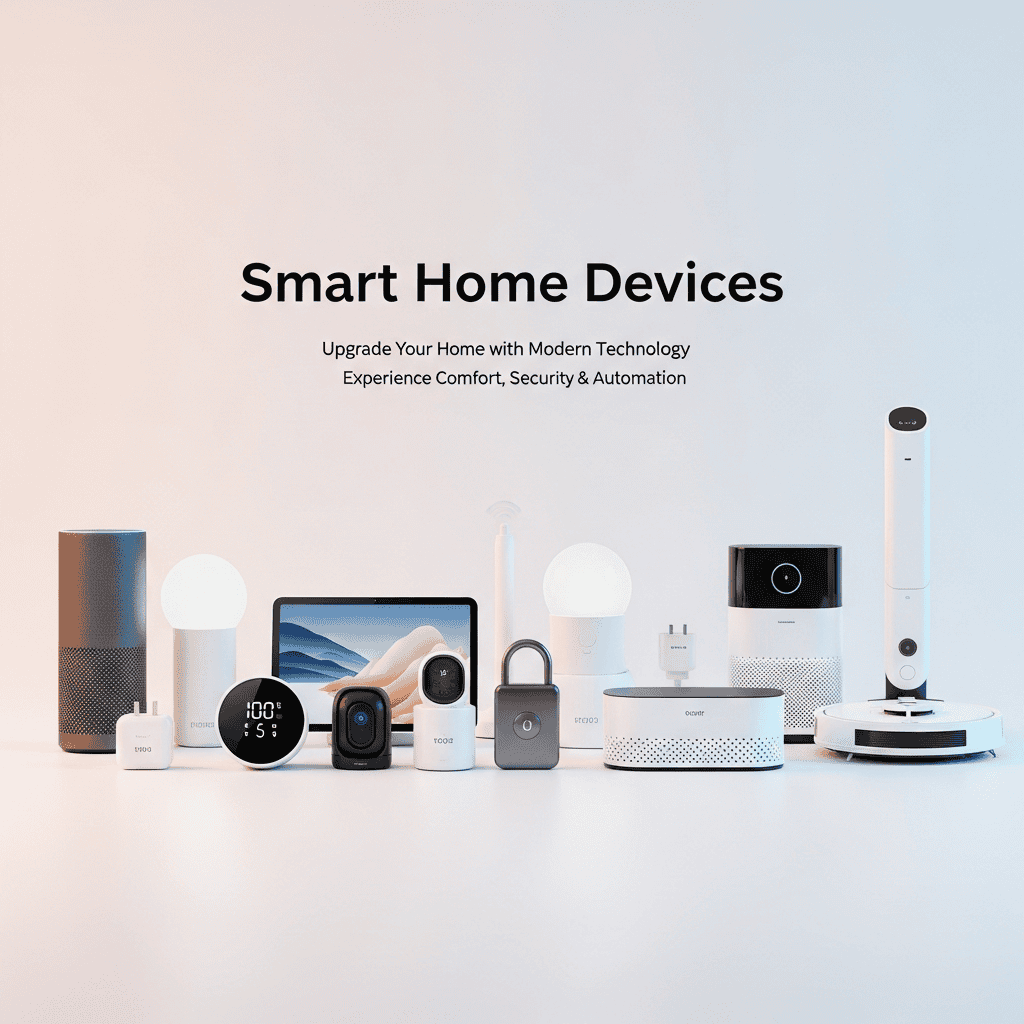
What is Smart Home | How it works | good and bad side
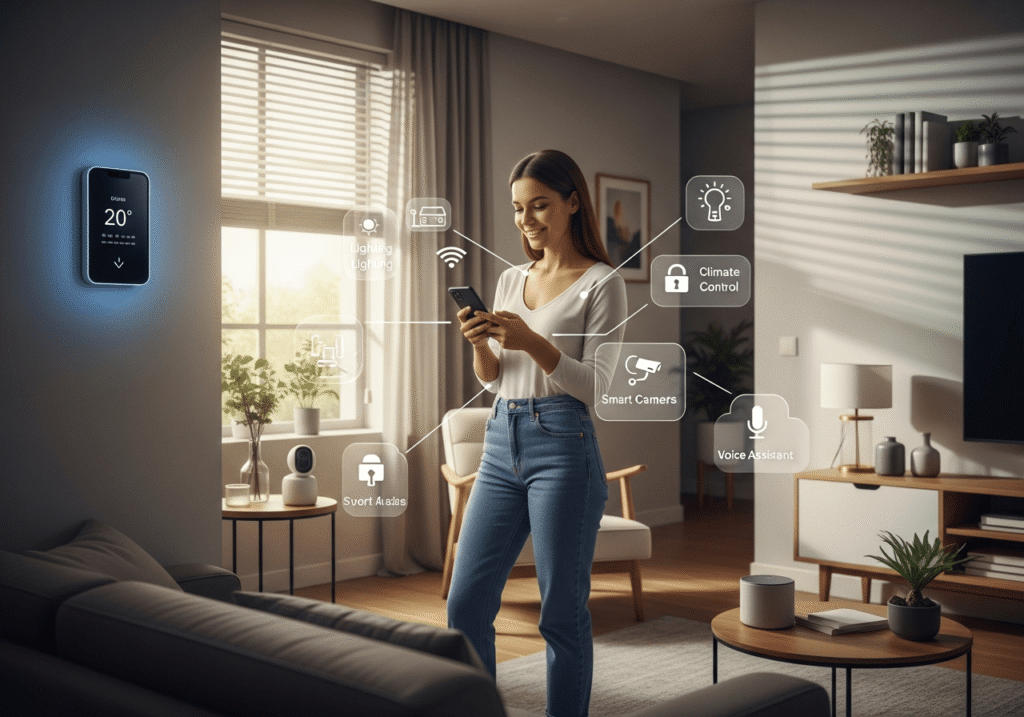
Smart home technology is no longer a futuristic concept seen only in movies. Today, it is real, accessible, and rapidly becoming a part of everyday life. From voice assistants to automated lighting and security systems, smart home automation promises convenience, comfort, and control—but it also comes with challenges and risks.
In this article, we’ll explore What is Smart Home, How it works and What are the good, and the bad sides of smart home automation so you can make informed decisions before diving in.
Table of Contents
What Is a Smart Home?
Smart homes, home automation, custom integration, home theaters, home audio, home security, and the Internet of Things—these terms are everywhere today. But what do they really mean?
The definition of a smart home can vary depending on who you ask. However, when broken down simply, there are two clear ways to understand what a smart home truly is.
Definition 1: A Smart Home as App-Based Control
The first and most common definition of a smart home is any home feature or device that can be controlled through a mobile app. This is an important distinction because it highlights how modern technology has changed the way we interact with our homes.
At its core, this type of smart home is simply a new form of manual control. Instead of walking to a wall and flipping a light switch, you now use your smartphone to perform the same action. The function remains the same—the method has evolved.
During one of the early certification classes attended in this field, conducted by Automated Outlet in Dallas, Texas, the instructor emphasized an important concept: the difference between manual control and true home automation.
Manual Control vs. Home Automation
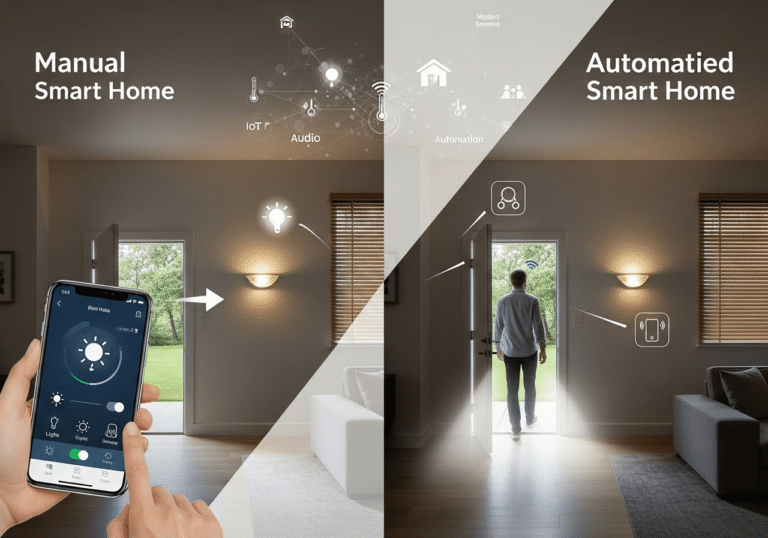
Home automation is when a house operates without requiring direct action from the homeowner.
You don’t need to press a button, flip a switch, or open an app. When you walk into a room, the lights automatically turn on. When you leave, they turn off. As you open the front door, a pathway of lights can guide you toward your destination within the house.
In contrast, using a smartphone to turn lights on and off is still considered manual control. It is simply the modern equivalent of using a traditional wall switch.
In its purest form, a true smart home is an automated home—one that can think, react, and act on its own without constant user input. However, in today’s market, the term “smart home” is often used more broadly to describe any home equipped with app-controlled devices.
Definition 2: The Complete Smart Home Ecosystem
The second definition of a smart home takes a broader view. It includes everything that falls under the smart home umbrella, such as:
- Home automation
- Custom integration
- Home theater systems
- Home audio solutions
- Home security systems
- The Internet of Things (IoT)
Any technology that connects, communicates, or works together within a home environment can be considered part of a smart home ecosystem.
Smart Homes Exist at Different Levels
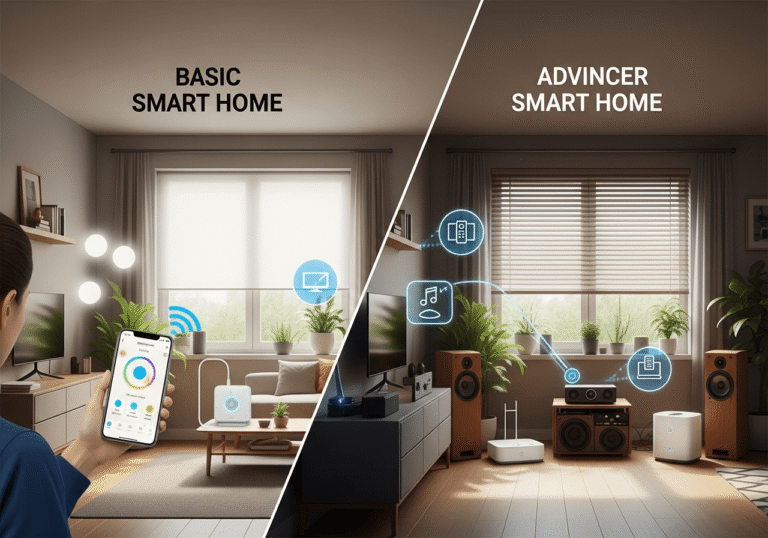
Smart homes are not one-size-fits-all. They exist at many different scales.
Some smart homes are simple, relying on mobile apps to manually control a few smart devices. These setups are effective, accessible, and still qualify as smart homes.
On a larger scale, smart homes may feature extensive custom integration. These systems combine multiple third-party products that communicate with one another seamlessly. In such homes, lights respond automatically to movement, rooms wake occupants with music in the morning, and window blinds open on their own.
Regardless of size or complexity, both simple and advanced systems fall under the definition of a smart home.
The Role of the Internet of Things
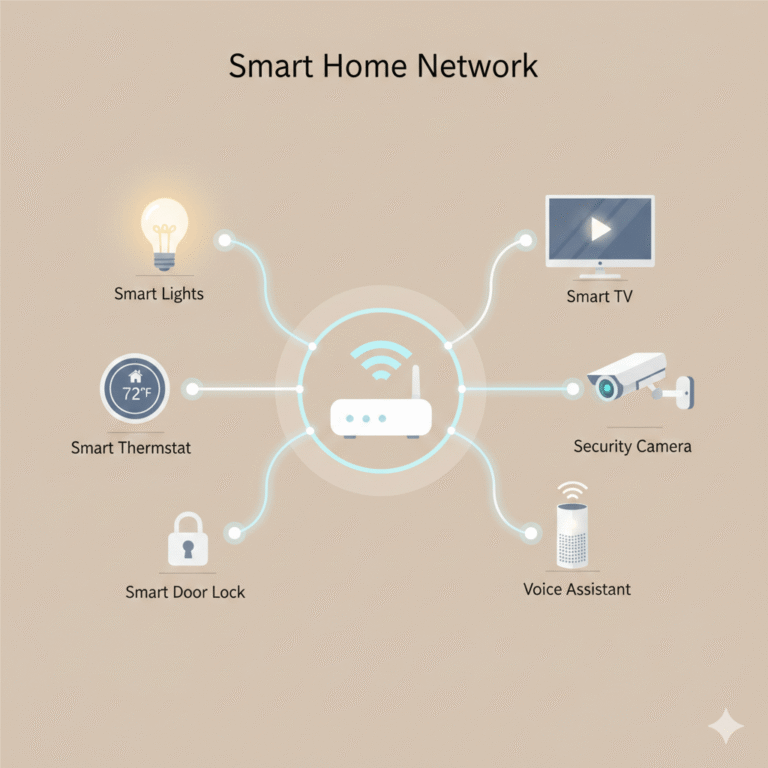
The Internet of Things is often mentioned in discussions about smart homes. In reality, it is largely a marketing term that describes the direction smart home technology is heading.
IoT refers to devices that connect to the internet or a home network. While the term may sound complex, it is simply another component of the smart home environment.
Whether it is called home automation, custom integration, or the Internet of Things, it all ultimately represents different aspects of the same concept—a smart home.
What Is Smart Home Technology?
The Internet of Things is often mentioned in discussions about smart homes. In reality, it is largely a marketing term that describes the direction smart home technology is heading.
IoT refers to devices that connect to the internet or a home network. While the term may sound complex, it is simply another component of the smart home environment.
Whether it is called home automation, custom integration, or the Internet of Things, it all ultimately represents different aspects of the same concept—a smart home.
What Components Make a Smart Home “Smart”?
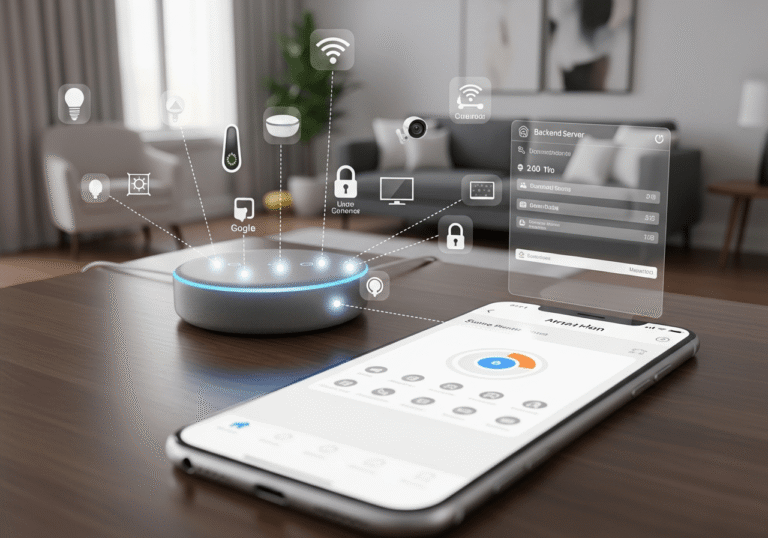
At the heart of every smart home is a smart home hub, which acts as the central command center. The hub ensures that all devices communicate and function together seamlessly. It connects devices through a backend system (server-side) and allows users to control everything through a front-end interface, usually a mobile application.
Popular smart home hubs include Amazon Echo, Google Nest, and Apple HomeKit.
Sensors
Sensors are the eyes and ears of a smart home. They continuously monitor the environment and send real-time data to the hub for analysis and action. Sensors track different parameters such as temperature, motion, and humidity, enabling automated responses based on changing conditions.
Actuators
Actuators are IoT-enabled devices that carry out the hub’s instructions. Examples include smart thermostats adjusting room temperature, smart TVs delivering entertainment, smartwatches sending alerts or updates, and many other connected devices that respond to user commands or automation rules.
How Do Smart Home Components Connect?
For a smart home system to work efficiently, all devices—including hubs, sensors, and actuators—must communicate reliably. There are four primary connectivity options used in smart home environments.
Wi-fi
Wi-Fi is the most commonly used connectivity option for IoT devices. It offers reliable and fast communication but consumes more power, which means devices often require regular charging.
Bluetooth
Bluetooth is more affordable and energy-efficient compared to Wi-Fi, but it has a limited range. Devices must be located close to each other, and remote control from outside the home is usually not possible.
Low Power Mesh Networks
Unlike Wi-Fi, which relies on a single router, low-power mesh networks such as Z-Wave and Zigbee use multiple nodes or access points. These nodes communicate with the main hub and with each other, creating overlapping wireless zones that provide broader and more reliable coverage throughout the home.
Ethernet
Ethernet offers a wired connection that ensures stable and high-speed communication between smart home devices. It is often used for devices that require constant and uninterrupted connectivity.
Example of How a Smart Home Works
Let’s say you want to cool your home before arriving. First, you open your smart home app and set your preferred temperature. The app sends this request to the smart home hub.
Sensors inside your home check the current temperature and relay the information to the hub. The hub then sends a command to the thermostat or air-conditioning system to cool the space to your selected temperature.
Once the desired temperature is reached, the app notifies you, ensuring your home is comfortably cool. Afterward, sensors continue monitoring the room, and the system switches to maintenance mode, adjusting airflow as needed to maintain the set temperature over time.
Smart house Automation: The Good and The Bad sides
Smart home technology is no longer a futuristic concept seen only in movies. Today, it is real, accessible, and rapidly becoming a part of everyday life. From voice assistants to automated lighting and security systems, smart home automation promises convenience, comfort, and control—but it also comes with challenges and risks.
In this article, we’ll explore the good and the bad, sides of smart home automation so you can make informed decisions before diving in.
The Good Side
How Smart Home Automation Enhances Daily Life
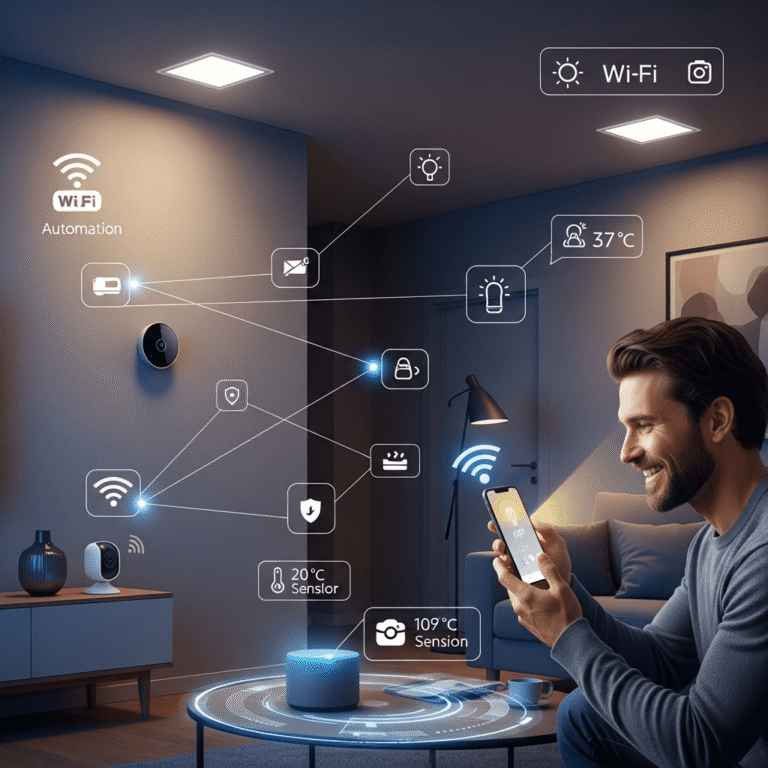
Smart home automation can significantly enhance your lifestyle. What once seemed like science fiction is now not only possible but often easy to set up.
Imagine waking up to your favorite music, the blinds opening automatically, and your coffee brewing—all without lifting a finger. With today’s smart home devices, this level of automation is achievable for many households.
The key is to start slowly. Adding devices piece by piece allows your smart home to naturally integrate into your daily routines. When done correctly, automation becomes so seamless that you eventually forget it’s even there.
Smart Climate Control
Smart thermostats like Nest or Ecobee learn your preferences over time and automatically adjust temperatures to keep you comfortable while saving energy. This not only improves comfort but can also reduce utility bills.
Smart Lighting and Convenience
Smart lighting systems can be controlled through motion detection, presence sensors, or voice commands. They make it easy to create a comfortable atmosphere—or simply turn off the lights the kids forgot to switch off.
Smart Locks and Home Access
With smart locks, you can lock or unlock doors remotely and check your home’s security status at any time. This added peace of mind is especially valuable on hectic mornings when you can’t remember whether you locked the door before leaving.
Smart Appliances That Actually Help
At first glance, smart washers and dryers may seem unnecessary or even silly. You might wonder why anyone would need them. However, receiving a notification on your phone or smart speaker saying, “Hey adyo, the washing machine is done,” makes it much easier to move laundry on time—ensuring clothes are ready in the morning instead of sitting wet overnight.
Smart Security and Safety
Smart home automation can dramatically improve home security. Devices such as security cameras, motion detectors, contact sensors, water leak sensors, and alarms can all work together as part of a modern security system.
Automated lighting can make it appear as though someone is home while you’re away, and automatic water shutoff valves can prevent major damage by turning off the water during a burst pipe.
Voice Assistants and Automation Routines
Voice assistants like Amazon Alexa, Google Assistant, and Apple Siri allow you to control multiple devices with ease. You can create routines that turn on the TV, adjust lighting, lower volume levels, or stop music playing in nearby rooms. These routines can even reset automatically when you turn the TV off—assuming it’s before 11:00 p.m., of course. Sleep still matters.
The bad Side
Challenges of Smart Home Automation
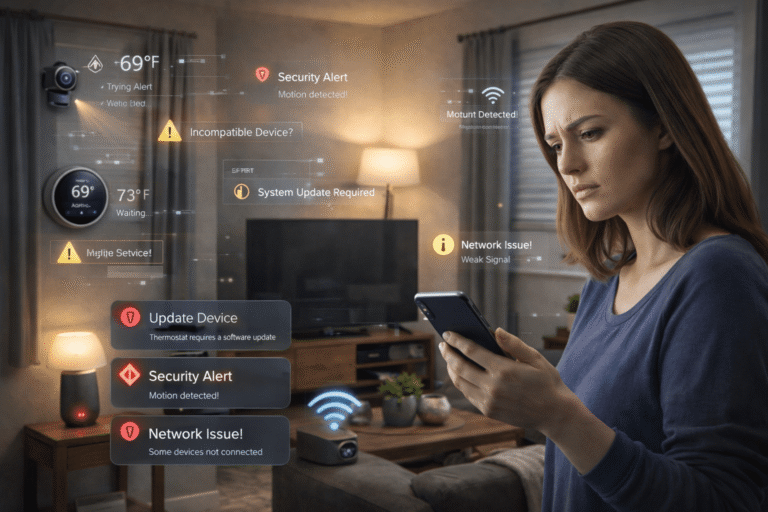
Despite all the benefits, smart home automation isn’t perfect.
Compatibility Issues
One of the biggest challenges is compatibility. Not all devices work well together, and manufacturers often provide apps that only control their own products. This can make it difficult to create a fully integrated smart home system.
To bridge this gap, many users rely on third-party platforms such as Home Assistant, Homey, or SmartThings. While powerful, these systems often require extra setup, technical knowledge, and ongoing maintenance.
Complexity and Maintenance
Some smart home devices and platforms come with a steep learning curve. Setup can be frustrating—especially for less tech-savvy users. On top of that, everything needs regular updates to remain functional and secure.
Reliability Concerns
Technology is never flawless. A smart home doesn’t feel very smart when the lights won’t turn on. Devices can lose connectivity, malfunction, or fail entirely, forcing you to rely on traditional methods until the issue is resolved.
Because manufacturers update their devices at different times, the system connecting everything also needs frequent updates and security patches. Maintaining a smart home is similar to maintaining a car—you either learn how to do it yourself or eventually pay someone else to do it.
privacy and security.
Smart devices collect significant amounts of data about your habits and daily routines. This data can be vulnerable to hacking, and it’s often unclear who owns it, who controls it, and where it’s stored—sometimes outside your country or legal jurisdiction.
News reports have repeatedly highlighted incidents where hackers gained access to smart home devices, compromising both personal privacy and home security.
Many people also overlook another major issue: smart devices are often purchased without realizing they have smart capabilities. TVs, washers, dryers, and other appliances are sometimes left in setup mode, broadcasting Wi-Fi or Bluetooth signals using default credentials—or no password at all.
This can allow unauthorized users to access devices without ever entering your home. A simple walk around many neighborhoods reveals multiple devices sitting in this vulnerable state.
How to Protect Yourself
To reduce risk, it’s important to secure your network and devices properly:
- Use strong, unique passwords for each device
- Enable multi-factor authentication (MFA) whenever available
- Keep devices updated with the latest security patches
Using a password manager like 1Password can make this process far easier. Avoid storing passwords in spreadsheets, as they are especially vulnerable to attacks. A good password manager not only generates strong passwords but also stores them securely.
Data Collection and Privacy
The data collected by smart devices can be used for targeted advertising or sold to third parties. That’s why reading privacy policies and understanding data usage is so important. If you’re concerned, consider using an alternate email address, name, or even a placeholder address when registering devices.
Final Thoughts: Is Smart Home Automation Worth It?
Smart home automation offers incredible convenience and has the potential to greatly enhance your lifestyle—but it’s not without risks and responsibilities.
At this point, smart technology is nearly unavoidable. From toothbrushes and TVs to vacuums, appliances, computers, and smartphones, almost everything now includes some level of smart functionality.
Whether you embrace it or not, these devices are already part of modern life. The real risk lies in not understanding how they work or how to secure them.
For many people, the benefits outweigh the downsides—but only when paired with awareness and education. Even if you’re not ready to fully automate your home, understanding smart devices will help you make better purchasing decisions and protect your privacy.